Quick Answer
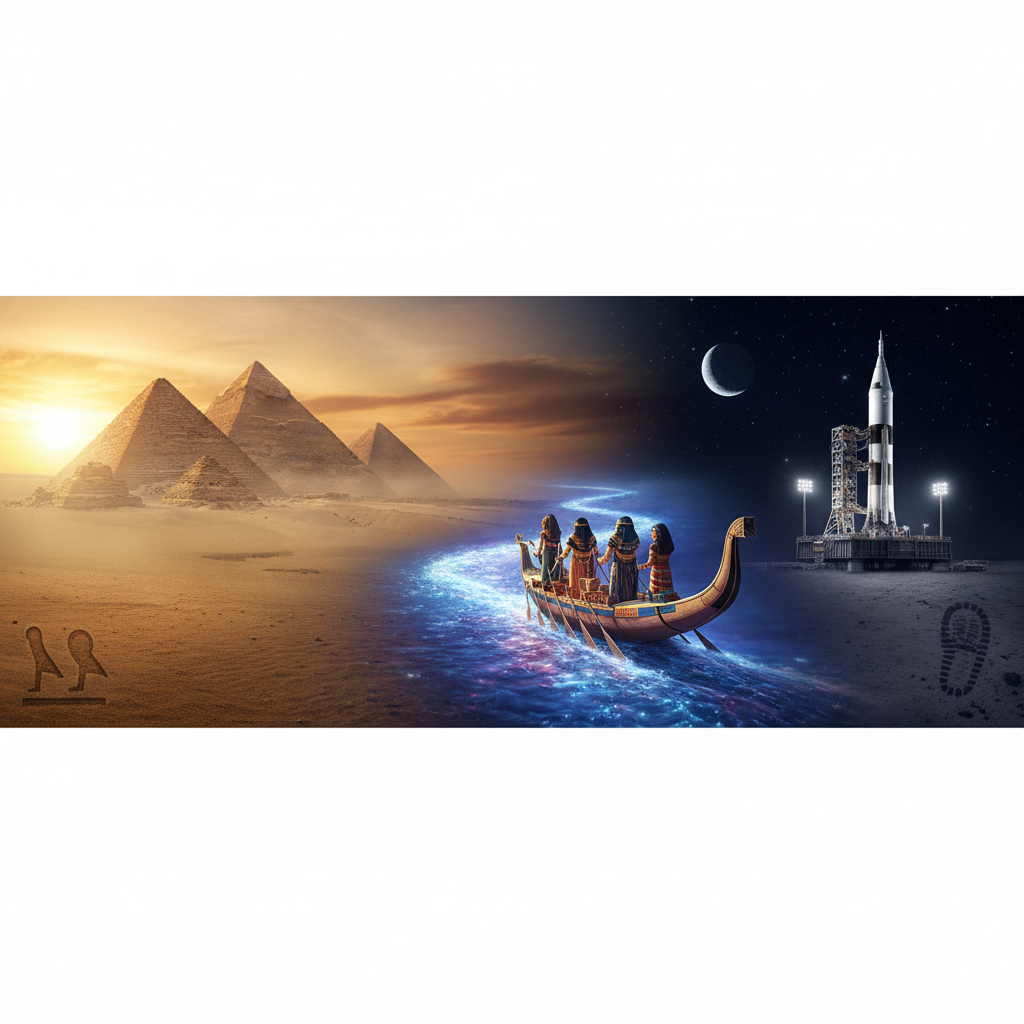
Cleopatra lived closer in time to the moon landing than she did to the building of the Great Pyramid. This is interesting because it shows just how incredibly ancient the pyramids were, even to people living in what we think of as ancient times, highlighting the vast sweep of history.
In a hurry? TL;DR
- 1Cleopatra lived closer to the 1969 moon landing (~2,000 years) than to the Great Pyramid's construction (~2,530 years).
- 2This highlights the immense age of the pyramids, even to ancient civilizations like Cleopatra's.
- 3Ancient Egypt spanned millennia, not a single monolithic era, experiencing significant cultural and political evolution.
- 4By Cleopatra's time, the pyramids were already ancient landmarks, weathered and mysterious for over 2,500 years.
- 5Recognize that 'ancient' history covers vast, diverse periods and major societal changes over time.
- 6Appreciate the immense depth of human civilization by considering these chronological disconnects.
Why It Matters
It's surprising to learn that Cleopatra was chronologically closer to the moon landing than to the construction of the Great Pyramid.
The phrase “ancient Egypt” conjures images of pharaohs, pyramids, and Cleopatra, often conflating millennia of history into one monolithic era. Yet, a striking chronological truth shatters this perception: Cleopatra lived closer in time to the 1969 moon landing than she did to the building of the Great Pyramid of Giza.
This fact isn’t just a curious anomaly; it utterly reshapes our understanding of historical scale and the sheer endurance of human civilisation. It highlights that the pyramids were ancient — truly ancient — even to those living in what we consider antiquity.
The Fact Explained: A Tale of Three Eras
Let's pinpoint the timeline. The Great Pyramid of Giza, commissioned by Pharaoh Khufu, was largely completed around 2560 BC. Fast forward nearly two and a half millennia, and we find Cleopatra VII, the last active pharaoh of Egypt, reigning from 51 BC until her death in 30 BC.
The gap separating Cleopatra from the pyramid builders is approximately 2,530 years. Now, consider the other side of the equation: Neil Armstrong stepped onto the lunar surface in 1969 AD. From Cleopatra’s death in 30 BC to the moon landing in 1969 AD, roughly 1,999 years passed. Mathematically, Cleopatra is about 500 years nearer to us than to the construction of Egypt's most iconic monuments.
Why This Temporal Sandwich Matters
This astonishing temporal fact underscores that ancient Egypt wasn't a static, unchanging civilisation. Instead, it was a dynamic tapestry woven over thousands of years, experiencing multiple empires, cultural shifts, and even foreign rule. By Cleopatra’s era, the pyramids were already tourist attractions, weathered by 2,500 years of wind and sand. They were as ancient and mysterious to her as they are to us, perhaps even more so, given the layers of lost history between her time and theirs. Consider that Cleopatra — a descendant of Greek Ptolemaic rulers — would have looked upon monuments almost certainly built by entirely different ethnic and linguistic groups than her own.
Historical Timeline Comparison
| Event | Approximate Year | Years from Cleopatra |
|---|---|---|
| Construction of Great Pyramid | 2560 BC | ~2,530 Years Before |
| Life of Cleopatra VII | 69 BC – 30 BC | 0 |
| Apollo 11 Moon Landing | 1969 AD | ~2,000 Years After |
| The Present Day | 2024 AD | ~2,054 Years After |
Discovery and Historical Context
Historians and Egyptologists have long acknowledged this vast temporal chasm. The Old Kingdom, during which the pyramids were built, was separated from the Ptolemaic period of Cleopatra by two "Intermediate Periods" of political fragmentation, the flourishing Middle Kingdom, and the powerful New Kingdom. This succession of eras involved significant cultural, religious, and political evolution.
According to a study by the American Research Centre in Egypt, by the time of Cleopatra, the Egyptian language spoken by the pharaohs had evolved considerably, and the religion itself had absorbed new influences. Cleopatra's own Greek lineage, tracing back to Alexander the Great’s general Ptolemy I Soter, further highlights how much the ruling class had transformed since the age of the indigenous pyramid builders. She was famously the first of her dynasty to learn Egyptian, preferring to converse in Greek.
“Cleopatra was a foreigner in her own land, ruling a kingdom that already felt like a museum of a lost world.”
Frequently Asked Questions
Sources & References
-
 History.comProvides the birth and death years of Cleopatra VII, identifying her as the last pharaoh of ancient Egypt.history.com
 -
2NASAConfirms the date of the Apollo 11 moon landing.nasa.gov
-
 BritannicaStates the approximate completion date of the Great Pyramid of Giza under Khufu.britannica.com
 -
4American Research Center in EgyptDiscusses the significant chronological and cultural separation between the Old Kingdom (pyramid builders) and the Ptolemaic period (Cleopatra's era).
-
BritannicaExplains that Cleopatra was of Greek descent, her dynasty beginning with Ptolemy I Soter after Alexander the Great's conquest.britannica.com