Quick Summary
This blog looks at twelve historical events that helped create the world we live in. It's fascinating to discover how seemingly small moments, from 17th-century coffee houses to the evolution of ocean algae, have had a massive and lasting impact on everything from our society to the air we breathe.
In a hurry? TL;DR
- 1Oxford University predates the Aztec Empire, showcasing remarkable institutional longevity.
- 2Global finance has roots in 17th-century London coffee houses where stock prices were first published.
- 3Ocean algae, not just rainforests, are responsible for about half of the Earth's oxygen production.
- 4The origins of many modern traditions can be traced back to ancient practices blended with newer elements.
- 5Even common English words possess intricate and deep historical grammatical structures.
- 6Understanding historical continuities reveals unexpected influences of past events on today's realities.
Why It Matters
It's surprising that ancient institutions like Oxford University are older than the Aztec Empire and that global finance took root in a 17th-century London coffee house.
Quick Answer
Historical events, from ancient academic foundations to the birth of global finance in coffee houses, continuously shape our modern lives in often unexpected ways.
TL;DR
- Oxford University is older than the Aztec Empire, demonstrating enduring institutions.
- Global commerce roots trace to a 17th-century London coffee house.
- Ocean algae produce half the world's oxygen, challenging assumptions about planetary lungs.
- Even simple English words can hide complex grammatical histories.
- Many familiar traditions blend ancient practices with modern interpretations.
Why It Matters
Understanding historical continuities helps us recognise how deeply past events influence present realities.
A Tapestry of Time and Tradition
History often appears as a linear progression. However, it is a complex web where ancient institutions and everyday habits intertwine, creating unexpected connections. Our perception of time can feel skewed when confronted with these historical layers.
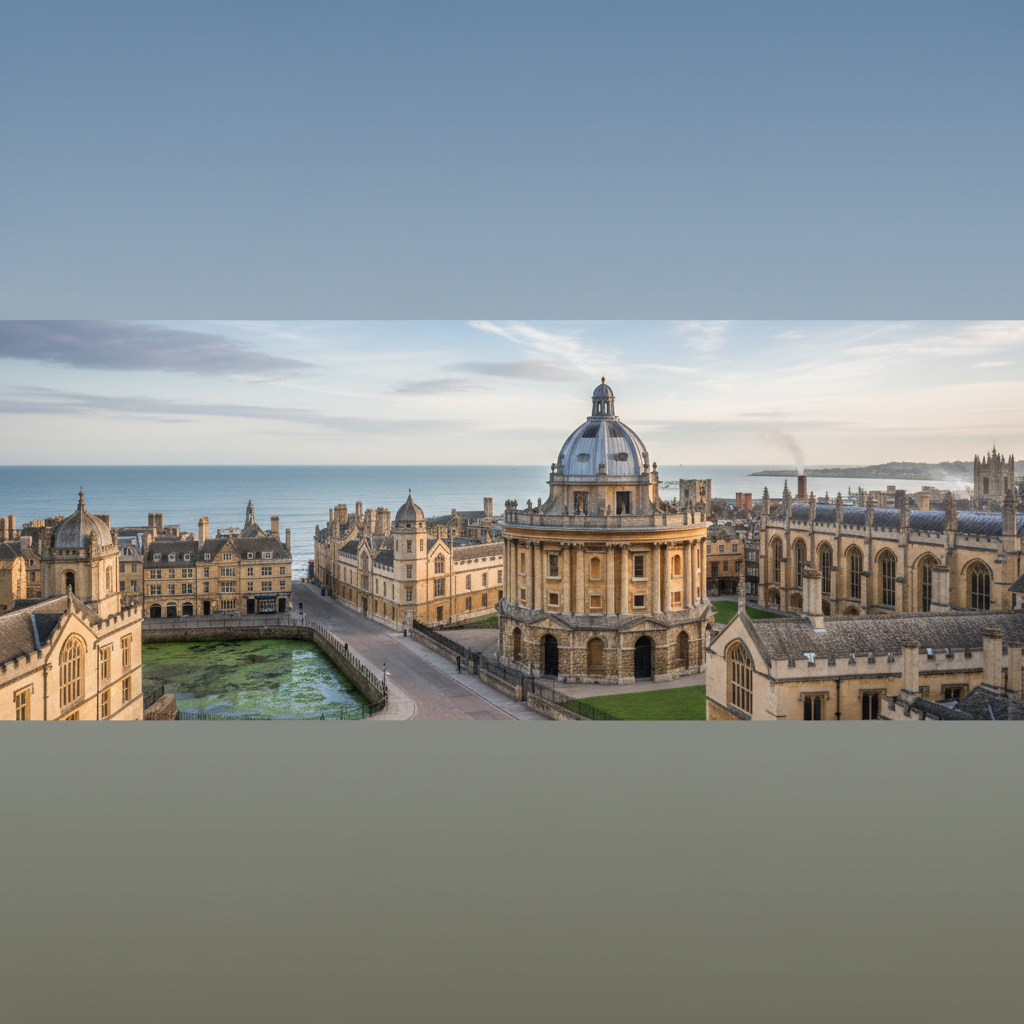
For example, Oxford University’s story highlights this. Teaching there began around 1096.
In contrast, the Aztec Empire was not founded until 1428. This means Oxford was educating scholars for over 300 years before Tenochtitlan's establishment.
This institutional longevity challenges our modern, fast-paced world. Today, companies and nations can rise and fall quickly.
We explored similar phenomena in our report on six bizarre historical and scientific realities that challenge your perception of truth. Our internal historical 'clock' is often poorly calibrated.
Origins of Global Commerce
Modern high-frequency trading seems like a purely digital, contemporary invention. Yet, the foundations of global finance are surprisingly humble.
The London Stock Exchange's origins lie in Jonathan's Coffee House. In 1698, broker John Castaing began publishing stock and commodity prices there.
The formal Royal Exchange often excluded rowdier brokers. Consequently, they moved to coffee houses, fostering these informal financial hubs.
This shows that major economic engines can begin as simple gatherings. People sought practical solutions, leading to powerful, lasting structures.
As Aristotle noted, 'we are what we repeatedly do' – excellence is a product of consistency. The habit of tracking prices in a coffee shop eventually underpinned the global economy.
Biological and Cosmic Milestones
History extends beyond human events to natural laws. We often credit the Amazon rainforest as Earth's lungs.
However, the reality is largely oceanic. According to studies published in Nature Geoscience, algae in the world's oceans produce nearly 50% of Earth's oxygen.
Our understanding of the universe has also undergone vast changes. For instance, the discovery of neutron stars in 1967 revealed extreme states of matter.
These celestial objects are incredibly dense. A sugar cube-sized piece of neutron star material would weigh billions of tonnes.
Our Calendar and Celestial Rhythms
Many of our holidays have ancient, astronomical roots. The winter solstice, for example, is the shortest day of the year.
Historically, this period marked a time of reflection and renewal. Many cultures celebrated the 'rebirth' of the sun after its longest absence.
Christmas, though a Christian festival, aligns closely with these ancient solstice traditions. This reflects how new traditions often layer over older ones.
Linguistic Legacies
Even our language carries historical complexities. Consider the word "you".
In earlier English, "you" was primarily a plural object pronoun. "Thou" was the singular subject.
Over centuries, "you" became both singular and plural, subject and object. This shift reflects ongoing changes in social address and formality.
Cultural Evolution: The Christmas Dinner
Traditions evolve in fascinating ways. For instance, Christmas dinner in Japan is often Kentucky Fried Chicken (KFC).
This tradition began in the 1970s. A brilliant marketing campaign, 'Kentucky for Christmas', linked KFC to American Christmas festivities.
Millions of Japanese families now celebrate with KFC. This demonstrates how modern marketing can create powerful, lasting cultural trends.
The Invention of the Light Bulb
Thomas Edison is often credited with inventing the light bulb. However, his work built on decades of prior research.
Joseph Swan in Britain created an earlier, long-lasting light bulb. Edison's contribution was refining it for practical, commercial use.
This highlights that major inventions are rarely sudden breakthroughs. Instead, they are typically the culmination of incremental improvements.
Practical Examples and Usage
- Historical Awareness: Knowing Oxford's age might encourage you to research other long-standing institutions, such as the Vatican Library or China's Imperial Examinations.
- Financial Context: Understanding the humble origins of the London Stock Exchange provides perspective on the rapid evolution of modern finance platforms like cryptocurrency exchanges.
- Environmental Understanding: Recognising the role of ocean algae can influence support for marine conservation efforts, shifting focus from solely terrestrial environmental concerns.
- Cultural Appreciation: Learning about Japan's KFC Christmas can open your mind to how cultural traditions are formed and adapted globally.
Connections to Related Topics
These historical insights connect to various fields. Institutional endurance relates to sociology and the study of long-term societal structures. The evolution of financial markets is crucial for understanding economics.
The contributions of ocean algae link directly to climate science and marine biology. Linguistic shifts provide context for English language studies and historical linguistics.
Key Takeaways
- History is a complex, interconnected web, not a straight line.
- Enduring institutions often predate nation-states or empires.
- Seemingly modern concepts, like global finance, have surprisingly humble beginnings.
- Our understanding of nature, like oxygen production, can be counter-intuitive.
- Cultural practices and traditions continuously evolve and adapt over time.
Frequently Asked Questions
Sources & References
-
1University of OxfordOxford University's history dates back to teaching in 1096.ox.ac.uk
-
 BritannicaThe Aztec empire was founded in 1428.britannica.com
 -
3London Stock ExchangeThe London Stock Exchange originated in coffee houses, specifically citing Jonathan's Coffee House in 1698.londonstockexchange.com
-
 NatureOcean algae produce nearly 50% of the Earth's oxygen.nature.com
Learn something new each day
Daily words, facts and quotes delivered to your phone.